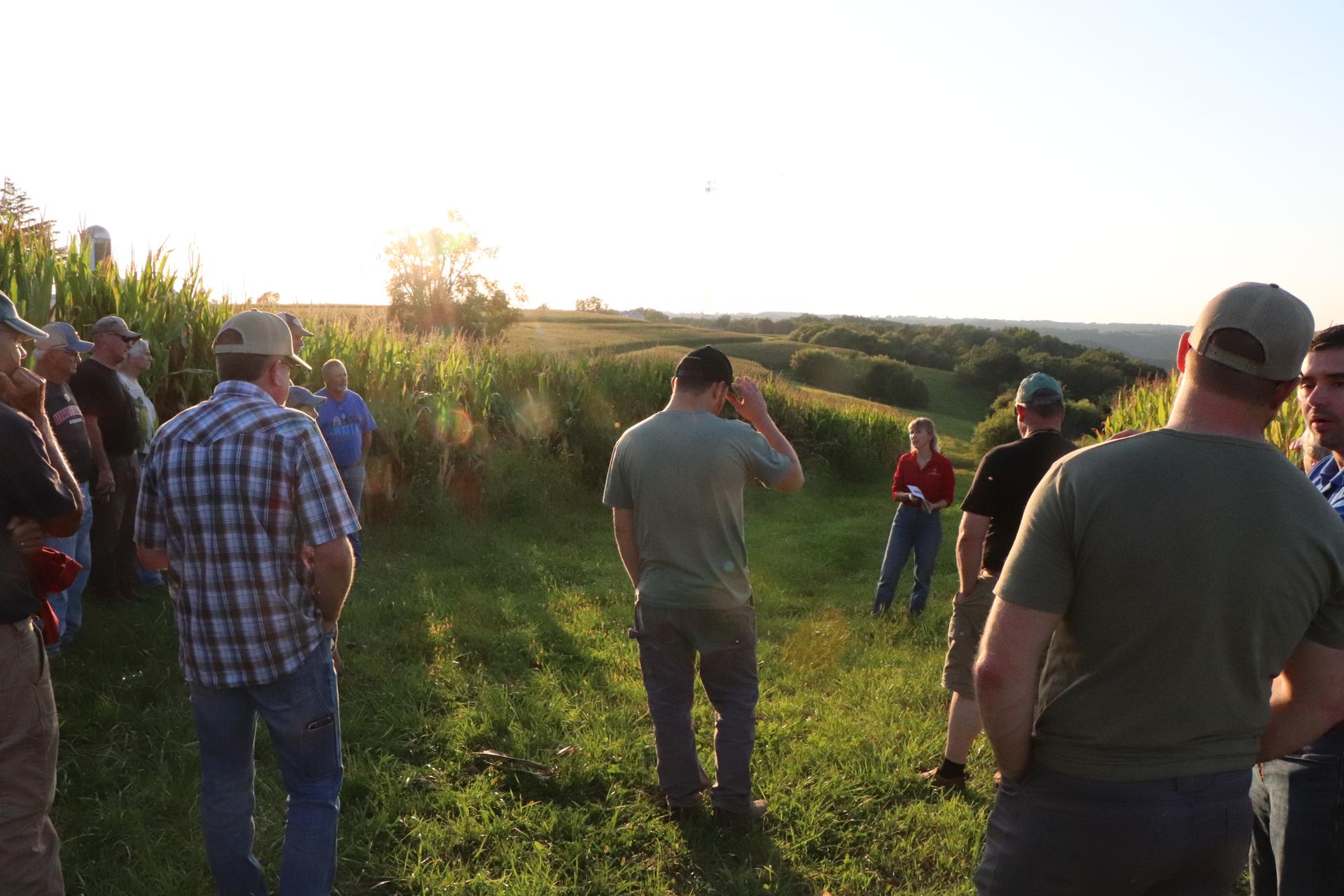
UW Extension Agriculture and Water Quality Specialist Sheri Schwert and host Orlan Bakkum lead guests on a tour of Orlan’s grassed buffer strips.
Sydney Widell | Watershed Coordinator
Thanks to all our friends and collaborators who joined us in September to help us celebrate our fifth anniversary at the Bakkum Farm, and an especially big thank you to the Bakkum family for hosting us. More than 80 people came up the watershed to help us mark the occasion with a locally sourced dinner and reflections on watershed conservation.
Coming together as neighbors for watershed conservation is a tradition that goes back a long ways in Coon Creek. Ninety-three years ago, Coon Creek residents and their partners collaborated to carry out the first watershed conservation project in the nation in an effort to build healthy soil and good lives, and as they said back in the day, to “learn how to make running water walk.” Their vision and courage live on in our mission to expand access to, awareness of, and adoption of the practices that support soil health, flood resilience, and community well-being in the Coon Creek Watershed.
In 2025, we funded nearly $22,000 in soil health and flood resilience practices and projects through our conservation incentive program. This funding supported cover cropping across 440 acres, helped us plant just under 2000 trees, and sustained transitions to perennial systems like managed grazing and hazelnut alley cropping.
Along the way, we’re reinvesting in our community through projects that not only fund on the ground conservation work, but also strengthen local supply chains by connecting breeders to growers and growers to markets, and which expand our collective capacity to drive watershed scale change through collaboration with our conservation partners.
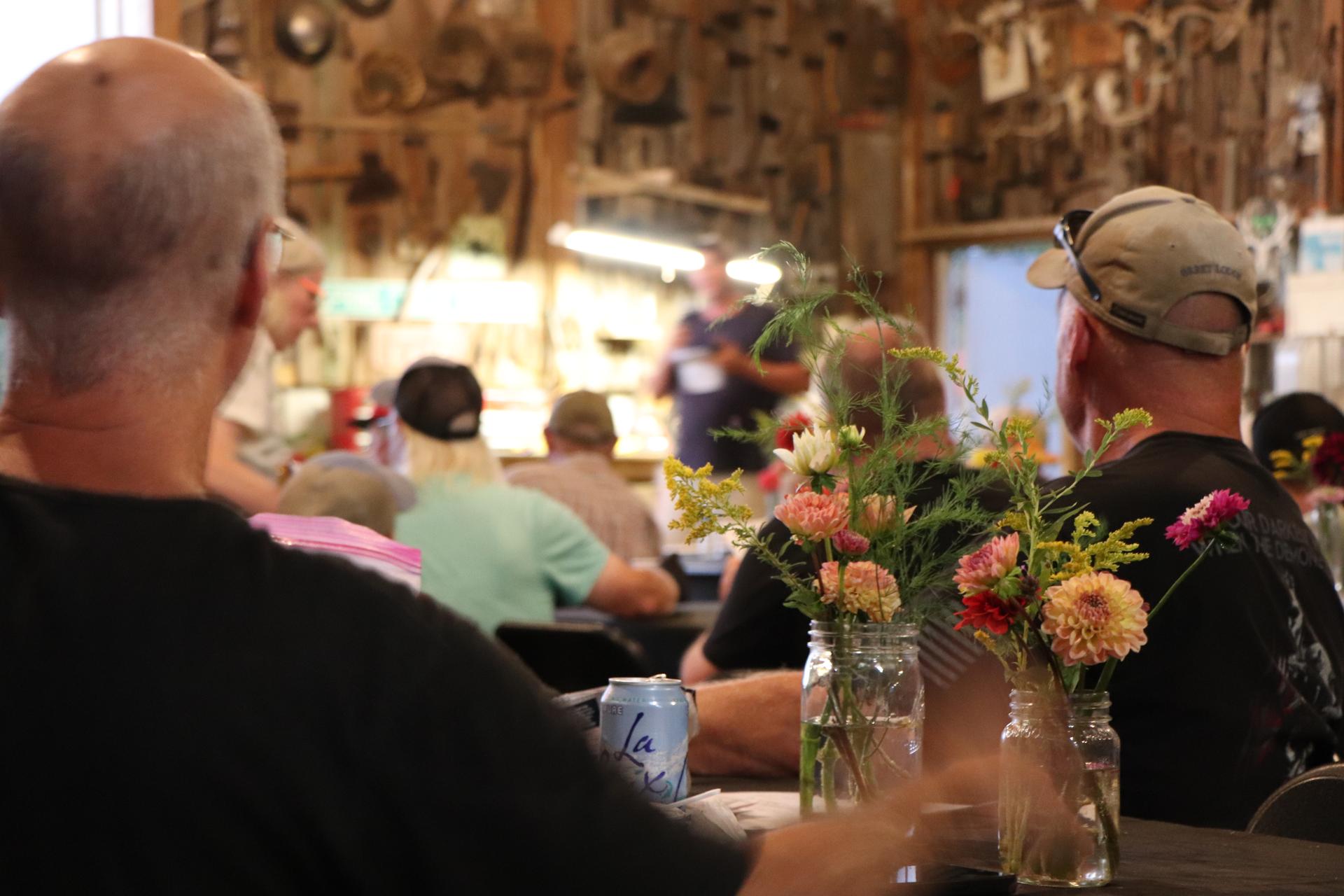
CCWC board member Matthew Canter closes the evening with words from Wendell Berry as well as a poem of his own.
Over the next two years, we are on track to more than double our impact, thanks to support from the Wisconsin Department of Agriculture, Trade, and Consumer Protection, The Nature Conservancy, the Sand County Foundation, and North Central Sustainable Agriculture Research and Education.
Most importantly, we’re committed to deepening the relationships and culture of openness that make not only our work possible, but fill in with joy and meaning. See you at the next community dinner!